Evrim Insights: China's Vertically Integrated Bet and the Implications for Global Energy Markets
April 1, 2026
Download the Data
Methane Hydrates: A Strategic Asset Locked in the Ocean Floor for Global Energy
Methane hydrates, natural gas molecules trapped in ice-like structures on the ocean floor, present as a future strategic asset in the global energy market. While commercial extraction remains pre-development, China's institutional architecture which integrates frontier geoscience, sovereign capital, and petroleum engineering expertise constitutes a strong position in a resource that, by geological estimates, exceeds the combined energy content of all known conventional fossil fuel reserves.
The Resource: Energy-Dense and Populous
Methane hydrates form where high pressure and low temperatures coincide - which happens to be extensively along continental margins and deep-sea trenches wherever organic matter accumulates in cold, high-pressure sediments.
When it comes to methane hydrates, it is important to distinguish between two separate resource classes, methane hydrates found in continental shelf deposits and those found in hadal deposits, as they carry different commercial timelines, engineering requirements, and geopolitical implications:
Continental Shelf Deposits (1,000–3,000m): The near-term commercial target. Within national EEZs, closer to existing offshore technology, and already the subject of active extraction testing by Japan and China. Engineering challenges exist but are narrowing.
Hadal Deposits (6,000m+): Scientifically newly characterized, commercially distant, and located in international waters beyond any nation’s EEZ.
Why does the resource remain untapped? The engineering challenges associated with extracting this resource increases with depth. Conventional offshore oil wells operate at approximately 3,000m, which is one-third of the depth of the deepest hydrate-bearing trenches. At 9,000 meters and beyond, the obstacles become categorically different: pressures approaching 950 atmospheres that crush conventional equipment, near-freezing temperatures that degrade electronics and embrittle metals, and seafloor stabilization risks when sediment is disturbed at extreme depth.
Shallower continental shelf deposits face a narrower but still unsolved set of engineering problems: unconsolidated sediments that clog wellbores, energy economics that remain close to break even, and reservoir instability during depressurization. Japan has demonstrated that gas can be extracted from shelf deposits; yet sustained commercial production remains elusive.
Still, the energy scale demands attention. Aggregated geological surveys estimate that methane hydrate deposits (across all depths) contain more recoverable energy than all known coal, oil, and conventional natural gas reserves combined.
China's Position: Driving Scientific Innovation & Governance
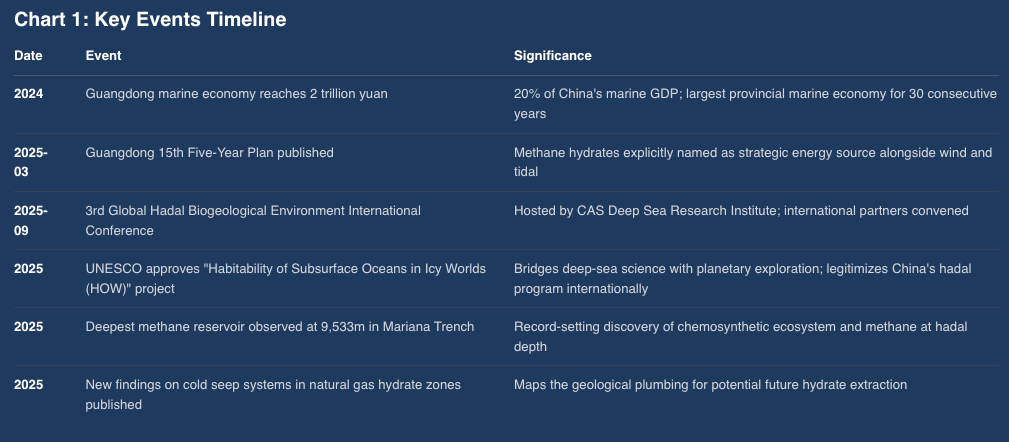
In 2025, researchers from the Deep-Sea Research Institute of the Chinese Academy of Sciences documented the deepest chemosynthetic ecosystem and methane reservoir on record, at 9,533 meters depth in the Mariana Trench. While the scientific achievement is notable, the institutional architecture surrounding it is impressive.
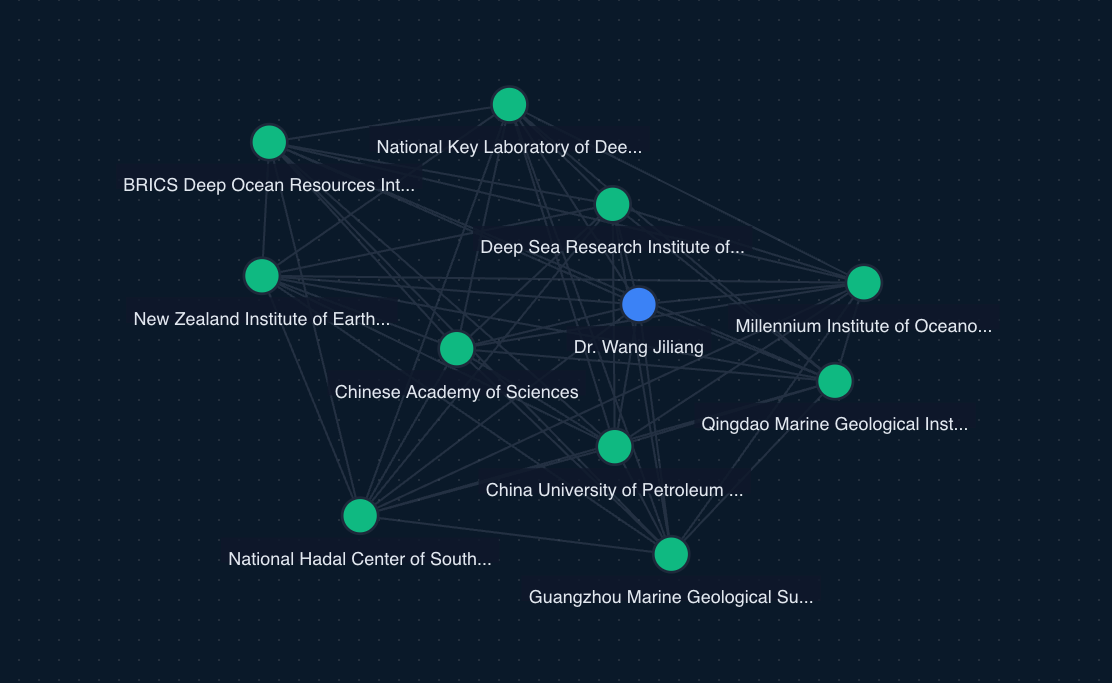
Key entities driving the scientific research forward include the Deep-Sea Research Institute from the Chinese Academy of Sciences (CAS), the National Key Laboratory of Deep-Sea Science and Intelligent Technology, Guangzhou Marine Geological Survey, Qingdao Marine Geological Institute, and the China University of Petroleum (East China).
The participation of a petroleum engineering university in hadal biology papers could point to the desire for resource development planning. The institute's concurrent publication of findings on cold seep systems in natural gas hydrate zones, effectively the subsurface plumbing diagrams for hydrate formation, reinforces this assessment.
Further, the 3rd Global Hadal Biogeological Environment International Conference, hosted by the Deep-Sea Research Institute from CAS, included participation from Denmark, Chile, New Zealand, and, critically, the BRICS Deep Ocean Resources International Research Center. The BRICS center, just launched in Hangzhou, China on April 24, 2025, represents an attempt to build the governance, scientific, and legal infrastructure for deep-sea resource access outside of Western-dominated institutional frameworks. The strategic logic mirrors what BRICS has pursued in financial infrastructure (alternatives to SWIFT, dollar-denominated settlement) and trade corridors: ensuring that when a new resource domain opens commercially, access is structured through frameworks designed by China and partner nations.
The Capital Signal: Guangdong's 15th Five-Year Plan
Guangdong province, with a marine economy of ¥2 trillion (~$275 billion) in FY2024, representing 30 consecutive years at the top of China's provincial marine GDP rankings, has written methane hydrates explicitly into its 15th Five-Year Plan as a strategic energy source, alongside offshore wind and tidal power.
While this capital is directed towards continental shelf extraction vs hadal depths extraction, this capital allocation matters for two reasons. First, Five-Year Plan language at the provincial level implies dedicated budget lines, infrastructure commitments, and permitting. Second, Guangdong is simultaneously building the Guangzhou Ocean Innovation Hub and Shenzhen Global Ocean City and integrating AI into marine resource exploration. The provincial level investment, combined with the previously mentioned scientific and governance initiatives, indicates a strong push towards the commercialization of methane hydrates.
Technical Status and Key Milestones to Watch
Commercial extraction of methane hydrates remains technically unsolved at scale. The core challenges are well-characterized: reservoir instability during depressurization, methane containment, deep-water logistics, and energy economics (extraction cost vs. gas value). Japan has conducted small-scale offshore production tests; results have been informative but not commercially viable.
What to watch for indicators of commercialization progress:
1. Focused coring and drilling campaigns in hadal zones (the authors of the paper for the 2025 Mariana discovery explicitly flag this as the next validation step).
2. Chinese government designation of methane hydrates as a formal 'strategic reserve' category at the national (not provincial) level.
3. BRICS Deep Ocean center publishing extraction-oriented technical frameworks (vs. scientific characterization).
4. Permitting or environmental review processes initiated for extraction pilots in Chinese EEZ or beyond-EEZ zones.
The Bottom Line
Methane hydrates are not a near-term disruptor but do present the potential to have significant geopolitical implications. China's institutional investment - sustained, coordinated, and now reaching into the deeper points on Earth - suggests commercialization is actively being pursued.
The conventional energy transition narrative centers on renewables. Yet, we note a parallel bet is being placed in the deep ocean, backed by sovereign capital, research institutions, and international coalitions.
All information sourced for this blog comes from the Evrim platform and holdings. Reach out to us at founders@evrim.ai for sourcing and to discover what other insights Evrim can provide your team!